Downloads

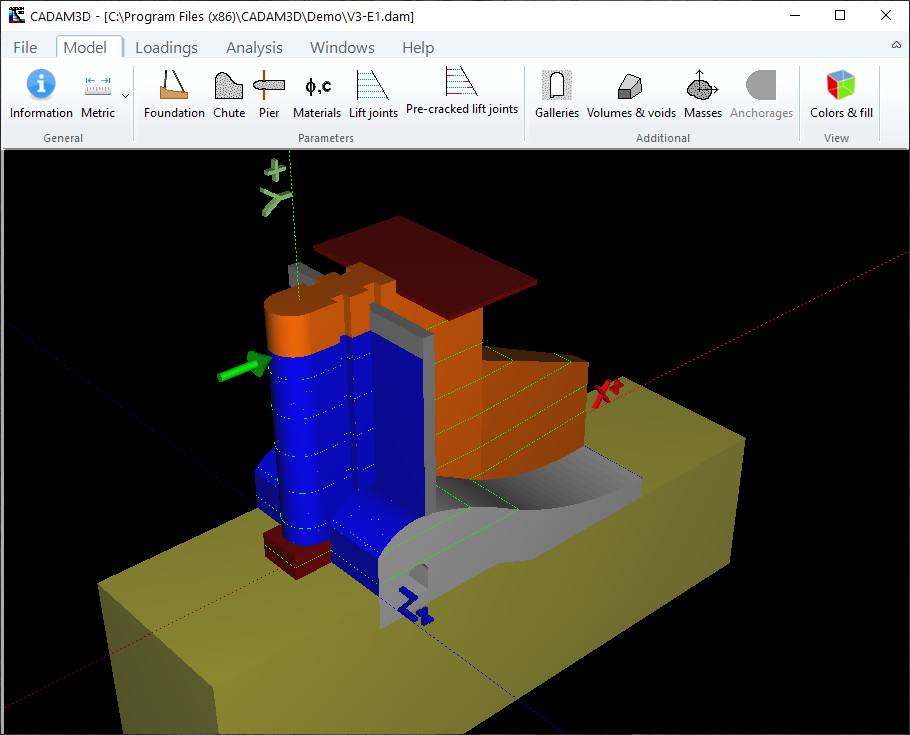
CADAM3D is a user-friendly software based on the gravity method originally developed for one of the world biggest concrete dam owner, Hydro-Quebec, and for Dams and Hydrology of the Quebec Ministry of Environment (Quebec's legislator for dam safety). CADAM3D is fully functional and is intensively used by Hydro-Quebec since 2005. To our knowledge, no other software similar to CADAM3D is available at this time.
If you perform stability analyzes of concrete hydraulic structures, this software will allow you to perform them much faster and more efficiently. If you are interested in this type of software and would like to try CADAM3D for free, please click on the button "Contact us for a free trial of CADAM3D" to send us a message.
: Many find that this frequency helps unlock the creative right hemisphere of the brain, making an emotional track like "Solo" feel even more personal and inward-facing. Why "Solo (432 Hz)" Hits Different Music Tuned to 440 Hz Versus 432 Hz and the Health Effects
Originally released on the album HNDRXX , finds Future at his most vulnerable. The lyrics explore themes of deep isolation, lavish living, and the internal pressure of success. He reflects on past relationships—specifically his breakup with Ciara—and the "solo" journey of navigating fame while trying not to let those in his corner down. The Frequency: 432 Hz
Tuning a track to 432 Hz involves lowering the pitch slightly from the 440 Hz global standard. Proponents of this "natural" or "healing" frequency believe it offers several unique benefits:
When the raw, high-fashion trap of Future meets the mathematical harmony of 432 Hz, it creates a unique listening experience that bridges heavy emotion with spiritual grounding.
: Listeners often describe the sound as "warmer" and more resonant with the body’s innate rhythms.
: Early studies suggest 432 Hz may lower heart rate, respiratory rate, and blood pressure more effectively than standard tuning.
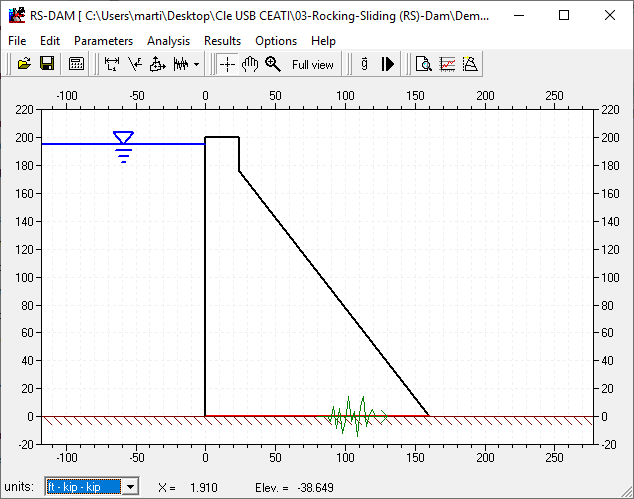
RS-DAM is a computer program that was primarily designed to provide a computational tool to evaluate the transient response of a completely cracked concrete dam section subjected to seismic loads. RS-DAM is also used to support research and development on structural behavior and safety of concrete dams.
RS-DAM is based on rigid body dynamic equilibrium. It performs a transient rocking and/or sliding analysis of a cracked dam section subjected to either base accelerations or time varying forces. Several modelling options have been included to allow users to explore the influence of parameters (e.g. geometry, additional masses, variation of the uplift force upon rotation, hydrodynamic pressures in translation (Westergaard) and rotation, center of rotation moving with sliding, coefficient of restitution of impact, etc...). RS-DAM is developed in a university context and has no commercial aspect. Future - Solo (432 Hz)
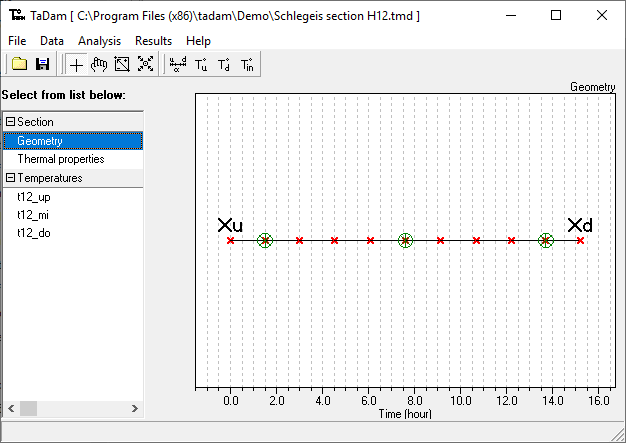
TADAM (Thermal Analysis of concrete DAMs) software employs a new frequency-domain solution technique to solve the 1D thermal transfer problem, allowing the calculation of temperature histories in a concrete dam section.
The direct solution calculates the evolution of the temperature distributions from the temperature histories of the upstream and downstream faces. The inverse solution uses temperature histories, measured inside the section, in order to calculate the temperature fields at the external faces, while taking into account the thermal wave attenuation effects and the phase angles along the section.
TADAM is developed in a university context and has no commercial aspect.